Request a Quote
Send us a message if you have any questions or request a quote. Our experts will give you a reply within 24 hours and help you.

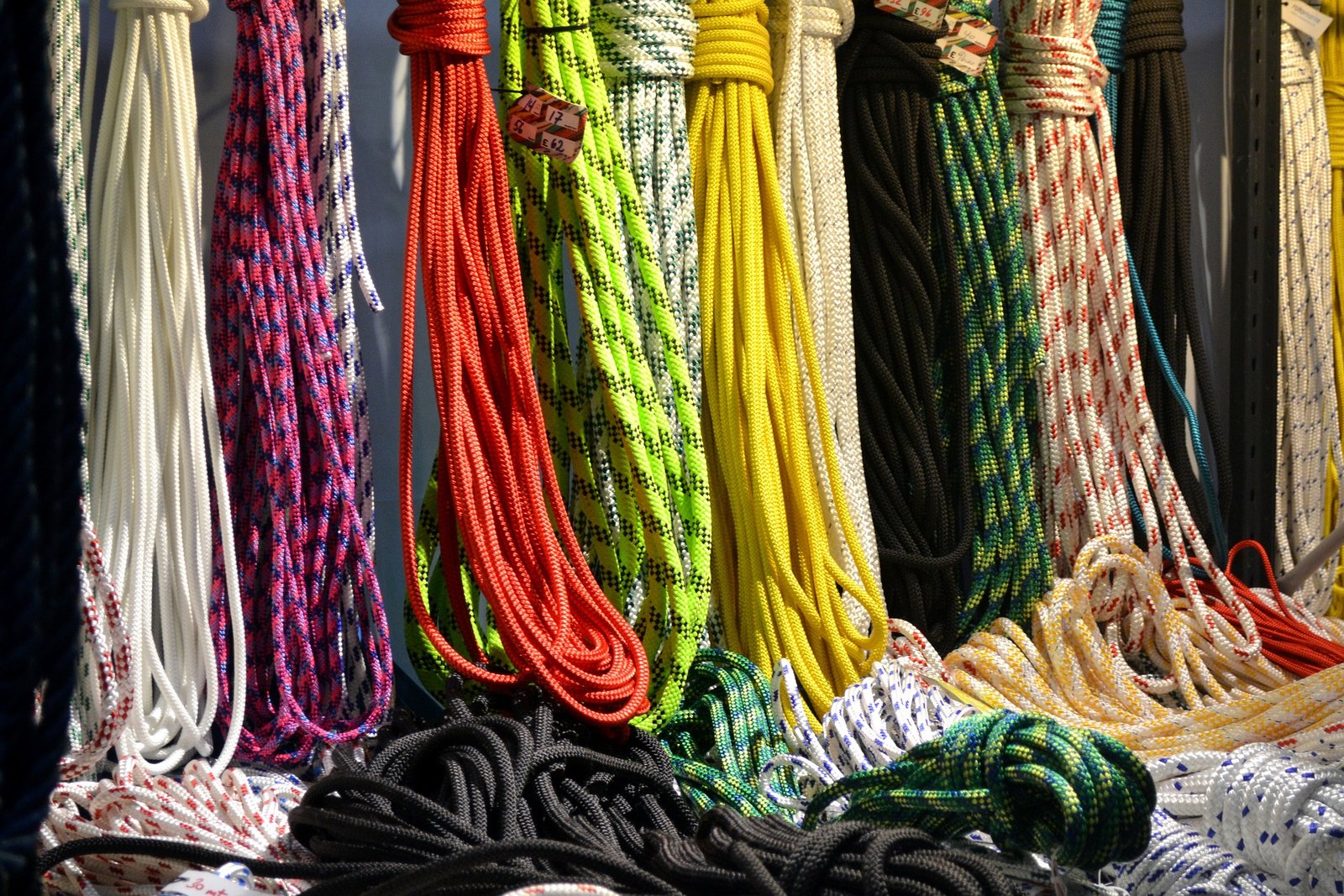
Choosing the right rope for your project might seem like a small decision, but anyone who has worked in construction, boating, or industrial settings will tell you: the wrong rope can cost you time, money, and even create safety risks.
If you are trying to decide between polyester rope and nylon rope, you are not alone. These two synthetic materials dominate the market, but they serve very different purposes. A professional rope manufacturer once shared a story about tying a canoe to his car with nylon rope, only to have it stretch in the rain and let the canoe slide off on the highway. That is exactly the kind of problem we want to help you avoid.
In this guide, we will break down the differences between polyester and nylon in plain language. No confusing industry jargon—just the facts you need to make the right choice.
Before we jump into the comparison, let us take a step back. Ropes have come a long way from natural fibers like manila and hemp. Today, synthetic ropes offer better strength, longer life, and more predictable performance.
Both polyester and nylon are synthetic, meaning they resist rot, mildew, and decay that would destroy natural ropes over time. But they achieve these qualities in different ways, which makes them suitable for different jobs.
Polyester rope is known among industry professionals as the stable, reliable workhorse. It does not like to stretch, and it does not give up when exposed to sun or water.
Low stretch. When you pull on polyester rope, it stays right where you put it. This property, technically called low elongation, makes it perfect for applications where you need things to remain steady. Think about securing a load on a truck or raising heavy construction materials. You want the rope to hold, not stretch like a rubber band.
UV resistant. Sunlight destroys many materials over time, but polyester handles it better than almost any other synthetic fiber. Studies have confirmed that polyester maintains its integrity even after long-term exposure to outdoor conditions. If your project lives outside, this matters.
Wet strength. Here is a surprising fact: nylon actually loses about 20 percent of its strength when wet. Polyester? It barely notices the water. This is why sailors and fishermen often prefer polyester for applications where the rope will get soaked regularly.
Abrasion resistance. When ropes rub against surfaces—dock edges, metal hardware, rough concrete—they wear down. Polyester offers excellent resistance to this kind of surface damage. It holds up where cheaper materials would fray and fail.
Temperature tolerance. Among synthetic ropes, polyester handles heat the best. If your project involves friction that could generate heat, this is worth remembering.
Nylon rope is the shock absorber of the rope world. It is strong—actually the strongest of all common synthetic fibers in terms of raw breaking strength—but it behaves very differently from polyester.
High elasticity. Nylon stretches. A lot. Under load, it can elongate up to 35 percent. For some jobs, this is exactly what you want. The stretch allows nylon to absorb sudden shocks and impacts that would snap a stiffer rope.
Excellent shock absorption. Because it stretches, nylon excels at handling dynamic loads. When a boat rocks against its mooring lines in choppy water, a nylon rope stretches slightly to absorb the energy rather than fighting against it. This protects both the rope and whatever it is attached to.
Strength. In dry conditions, nylon is the strongest common synthetic fiber available. It can handle massive loads before reaching its breaking point.
Chemical resistance. Nylon holds up well against oils, chemicals, and alkalis. If your project involves exposure to industrial substances, this matters.
Wear resistance. Like polyester, nylon offers good resistance to surface wear and rubbing. It is a durable material that stands up to repeated use.
Now that we understand each material individually, let us put them side by side. This comparison will help you decide which one belongs in your project.
This is the biggest difference between the two ropes.
Polyester has low stretch. It maintains its length under load, making it ideal for applications where stability matters.
Nylon has high stretch. It acts like a spring, elongating under pressure and returning to its original length when released.
Winner: It depends on your needs. For static loads where you do not want movement, choose polyester. For dynamic loads where you need shock absorption, choose nylon.
Water changes everything for some ropes.
Polyester performs almost identically wet or dry. Its water absorption rate is only about 0.4 percent, meaning it barely gets wet at all.
Nylon absorbs water and loses about one-fifth of its strength when wet. This is a critical factor for marine applications.
Winner: Polyester, hands down. If your rope will get wet regularly, polyester is the safer choice.
Ultraviolet radiation from the sun breaks down many materials over time.
Polyester leads the pack in UV resistance among synthetic fibers. It withstands prolonged sun exposure better than nylon or polypropylene.
Nylon is more susceptible to UV degradation. While it still performs better than natural fibers, it will weaken faster than polyester if left in direct sunlight for long periods.
Winner: Polyester. For outdoor applications with constant sun exposure, polyester lasts longer.
This gets a little technical, so let us keep it simple.
Nylon has the highest dry strength of any common synthetic fiber. When you absolutely need maximum breaking strength in dry conditions, nylon delivers.
Polyester comes in second for dry strength but actually outperforms nylon in wet conditions because it does not lose strength when wet.
Winner: Nylon for dry applications, polyester for wet applications. If you need the absolute strongest rope and can keep it dry, go nylon.
Both ropes perform well here, but there are differences.
Polyester offers excellent abrasion resistance, holding up well against repeated rubbing and surface wear.
Nylon also offers good abrasion resistance, though some studies suggest polyester may have a slight edge in long-term durability under constant friction.
Winner: Close call, but polyester takes a slight lead, especially in wet conditions where nylon weakens.
Budgets matter in every project.
Polyester is generally more expensive than nylon. The price difference reflects its superior UV resistance, wet performance, and stability.
Nylon is typically less expensive than polyester, though prices vary based on market conditions and specific formulations.
Winner: Nylon, if you are strictly comparing purchase price. But remember: the cheapest option upfront is not always the most economical over the life of your project.
Theory is helpful, but real-world applications make the decision concrete. Here is how professionals typically use these ropes.
Mooring lines and dock lines. When you tie a boat to a dock, you do not want it stretching and bouncing. Polyester holds steady.
Anchor lines. Some anchoring applications benefit from polyester’s low stretch and wet strength.
Construction lifting. Raising materials with a winch or pulley system requires minimal stretch. Polyester keeps loads stable.
Guy lines and static supports. For tents, towers, or any structure that needs steady support, polyester is the choice.
Outdoor applications. Thanks to UV resistance, polyester outlasts other ropes in the sun.
Mooring lines for choppy conditions. Wait, did we just say polyester for mooring? Yes, but nylon has its place here too. In rough water where boats bounce and pull suddenly, nylon’s stretch absorbs shock and protects cleats and fittings.
Tow ropes and snatch ropes. When pulling vehicles or recovering stuck equipment, stretch is your friend. It absorbs the sudden force and reduces jerking.
Climbing ropes. The stretch in nylon ropes used for climbing and safety applications helps absorb the energy of a fall.
Anchor riders. Some anchoring systems use nylon for the section closest to the boat to absorb wave action.
Applications requiring maximum dry strength. If weight and bulk are concerns and the rope stays dry, nylon delivers more strength per diameter.
Let us walk through some scenarios to see how this plays out.
Imagine you own a small marina and need to supply dock lines for boaters. You want a rope that will hold boats securely against the dock without stretching, survive constant sun exposure, and resist weakening when soaked by waves or rain.
The right choice: Polyester rope. Its low stretch keeps boats positioned correctly, UV resistance handles the sun, and wet strength ensures reliability even after days of rain.
Your community group is organizing a lakeside tug-of-war competition. You need a rope that feels good in hands, provides some give during the pull, and can handle sudden tension when teams really start fighting.
The right choice: Actually, for pure fun, natural manila might be best. But if you want synthetic durability with some shock absorption, nylon would work well. Its stretch would make the pull less jarring on participants.
You are lifting trusses to the roof of a new bunkie or shed. The rope runs through pulleys and must hold heavy loads steady while workers position them.
The right choice: Polyester. The low stretch prevents bouncing and gives workers precise control over load positioning.
Your team needs a line that can be thrown to someone in the water. The rope must float for easy retrieval.
The right choice: Neither polyester nor nylon floats—they both sink. For this job, you would want polyethylene or polypropylene rope that stays on the surface.
When you have decided which rope you need, the next question is where to get it. Quality varies significantly between manufacturers, and cheap rope is rarely a bargain.
Experience matters. Companies with decades in the industry have refined their processes and understand real-world applications. Some manufacturers, for instance, have been producing rope since the 1980s and now supply major industries worldwide.
Certifications count. Reputable manufacturers obtain certifications from classification societies like the China Classification Society, the American Bureau of Shipping, DNV, and Lloyd’s Register. These third-party verifications confirm quality standards.
Production capacity. A manufacturer that produces thousands of tons annually likely has consistent processes and reliable supply chains.
Range of products. Manufacturers offering multiple rope types—polyester, nylon, polypropylene, and specialty blends—demonstrate comprehensive knowledge of the field.
Testing capabilities. Leading manufacturers invest in testing equipment like tensile testing machines to verify strength and performance. This matters for critical applications.
China has emerged as a major player in synthetic rope manufacturing. Companies like Yangzhou Zhongyuan Jiuli Rope Company and Jiangsu Xiangchuan Rope Technology combine decades of experience with modern equipment imported from Germany and Japan. These manufacturers supply ropes for ocean shipping, shipbuilding, defense, mining, fishing, port operations, and oil exploration.
Many have earned ISO 9001 certification and approvals from multiple international classification societies. For buyers seeking quality polyester or nylon rope, these established manufacturers offer reliable options.
The rope industry has evolved tremendously since the days of hand-laid natural fibers. Today’s synthetic ropes offer performance that previous generations could only dream of. But with that performance comes responsibility: the responsibility to choose wisely for your specific application.
Whether you need the steady reliability of polyester or the shock-absorbing strength of nylon, understanding the fundamental differences between these materials ensures you get the right tool for the job. And when you find a trustworthy rope manufacturer who stands behind their products, you build relationships that serve your projects for years to come.
Remember the canoe on the highway? That is what happens when good materials meet the wrong application. Do not let your project become someone else’s cautionary tale. Take five minutes to think through your requirements, match them to the right rope, and work safely.
After all, the best rope is not the strongest or the cheapest—it is the one that does exactly what you need it to do, every single time.