Request a Quote
Send us a message if you have any questions or request a quote. Our experts will give you a reply within 24 hours and help you.


So, you’re looking at ropes for a project. Maybe it’s for securing a kayak to your car’s roof rack, setting up a durable clothesline in the backyard, or even for a critical task on a boat. You’ve heard “diamond braid polyester rope” recommended, but the big question in your mind is: “Just how strong is this stuff, really?”
It’s a fantastic question. “Strong” can mean different things—it can mean not breaking under a heavy pull, or it can mean not wearing out after rubbing against a rough surface for months. When we talk about diamond braid polyester rope, its strength is a complete package. It’s not just about a single number on a spec sheet (though we’ll get to those); it’s about a combination of tensile strength, abrasion resistance, and long-term durability that makes it a top choice for both pros and DIY enthusiasts.
Let’s untangle the true strength of this versatile rope, see how it stacks up against other types like nylon, and understand what makes a reliable rope manufacturer the key to getting all that performance into your hands.
First, let’s break down the name. It tells you everything about what it’s made of and how it’s built.
The result? A rope that is smooth to the touch, easy to handle, resists kinking, and is exceptionally durable. It’s the workhorse you find on sailboats, in warehouses, on farms, and at construction sites.

When you ask about strength, you’re really asking several questions. Let’s look at the different ways diamond braid polyester proves its might.
This is the most direct measure—how much load can it take before it snaps? Diamond braid polyester has excellent tensile strength. For example, a common 1/2-inch (12mm) diameter diamond braid polyester rope can have a breaking strength in the range of 5,000 to 7,000 pounds (approx. 2,270 to 3,175 kg). That’s more than enough to lift a small car.
However, a trustworthy rope manufacturer will always provide a Working Load Limit (WLL). This is the maximum load you should safely apply during regular use. It’s typically only 15-20% of the breaking strength, building in a huge safety margin (often a 5:1 safety factor). So, that same 1/2-inch rope might have a safe WLL of around 1,000 to 1,400 pounds. Never use the breaking strength as your guide for daily use; always follow the WLL.
This is where polyester truly shines and a key part of its “real-world” strength. You could have the highest tensile strength in the world, but if the rope wears through after being dragged over a rough corner, it’s useless. The tight, smooth diamond braid construction creates a very tough outer surface that can withstand significant rubbing against rocks, dock pilings, and metal hardware far better than many other constructions. This makes it ideal for applications like tow lines, anchor lines, and any situation where friction is unavoidable.
A rope’s strength is useless if it falls apart in the sun or water.
Here’s a critical concept: Low stretch is a form of strength in control. Compared to a material like nylon, which can stretch up to 15-20% under load, polyester stretches only about 2-3%. Why is low stretch a strength?
You’ll often see these two synthetic giants compared. Both are strong, but their “strength profiles” are different.
| Strength Characteristic | Diamond Braid Polyester Rope | Nylon Rope |
|---|---|---|
| Tensile Strength | Very High | Exceptionally High (Often the highest of common synthetics) |
| Stretch | Very Low (2-3%) – Great for precise control | Very High (15-20%) – Great for shock absorption |
| Abrasion Resistance | Excellent | Good, but can be compromised by sharp edges due to stretch |
| Wet Strength | Retains 100% strength | Loses about 10-15% strength when wet |
| UV & Rot Resistance | Excellent | Good, but slightly less than polyester |
The Verdict: Choose diamond braid polyester when you need minimal stretch, high abrasion resistance, and consistent strength in wet conditions (e.g., sailboat rigging, permanent tie-downs, towing). Choose nylon when you need ultimate shock absorption and energy load (e.g., docking lines, anchor rodes, climbing safety lines).
The potential strength is in the polyester fiber, but the actual strength in the rope you buy is put there by the rope manufacturer. This is why brand and quality matter immensely.
A cheap, no-name rope from an unknown source might look the same but will almost certainly have lower, inconsistent strength and faster degradation. Investing in a rope from a trusted rope manufacturer is investing in guaranteed performance and safety.
Knowing its strength is one thing; using it correctly is another. Here’s how to match the rope to your job and keep it strong for years.
1. Match the Diameter to Your Load.
Use the Working Load Limit (WLL) provided by the manufacturer, not the breaking strength. For lifting or securing critical loads, always err on the side of a larger diameter. Remember, knots can reduce a rope’s effective strength by up to 50%, so factor that in.
2. Inspect and Maintain Its Strength.
Even the strongest rope needs care. Regularly inspect your rope for:
3. Avoid These Strength-Killers.
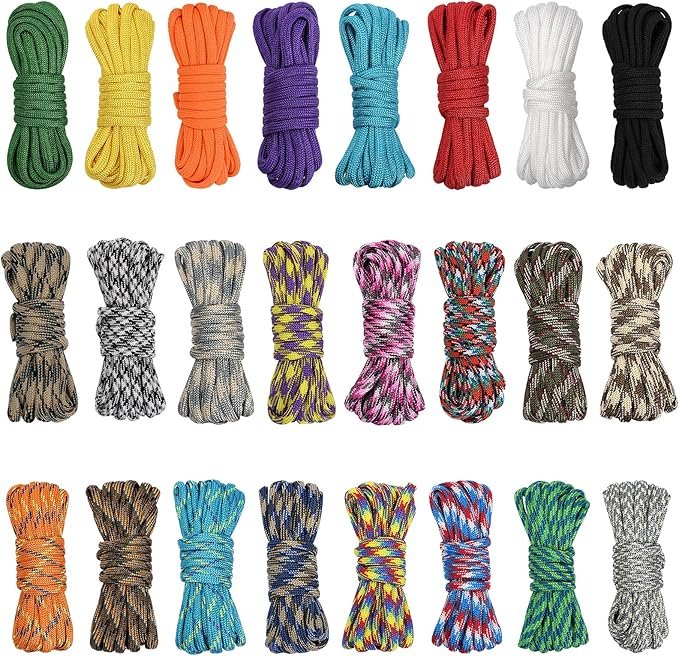
So, how strong is diamond braid polyester rope? Its strength is dependable, durable, and multi-dimensional. It combines high tensile strength with best-in-class abrasion resistance, near-zero water absorption, and excellent UV resistance. Its defining low-stretch character makes it the strong, predictable choice for any task where control and durability are paramount.
While materials like nylon excel in shock-load scenarios, diamond braid polyester is the undisputed champion for long-term, wear-resistant, and precise applications. By choosing a high-quality product from a reputable rope manufacturer and using it within its safe working limits, you are putting one of the most reliably strong and versatile tools directly into your hands. For your next project that demands a balance of pure power and unwavering durability, diamond braid polyester rope is an exceptionally strong contender.


